
The boutiq switch glow real vs fake question is the easiest one in the whole range to settle, and almost nobody uses the check that settles it. The Glow edition has a physical property that cannot be printed, cannot be photographed convincingly, and takes two minutes to test with a lamp and a dark room.
Everything below is specific to this edition. For the standard device the general Switch checks apply, and for other product types there are pages on threaded cartridges, sealed disposables and the V5.
On this page
- Why the Glow is easier to check than any other edition
- How the real glow works, and why it decides the question
- The boutiq switch glow real vs fake decay test
- Uniformity, and what paint looks like
- The V4 platform underneath
- Daylight colour and the print
- Checking a Glow you have owned for months
- Boutiq switch glow real vs fake at a glance
- A limited run means fewer pairings, not more
- Glow edition questions
Why the Glow is easier to check than any other edition
Counterfeiting is a copying problem, and copying is cheap when the thing being copied is an image. Artwork is a file. Shell shapes come from tooling that already exists. Those are the parts that always come out close.
The Glow breaks that pattern because its defining feature is a material property rather than an appearance. A phosphorescent shell is a manufacturing input with a cost attached, and an operation working on counterfeit margins reaches for paint, print or a tinted plastic instead. All three look right in daylight and all three fail the moment the lights go out, which is what makes boutiq switch glow real vs fake unusually decidable.
How the real glow works, and why it decides the question
It is phosphorescence, not electronics. The shell absorbs light while the device sits in daylight or under a lamp, then releases that energy slowly once it is dark. Nothing is switched, nothing is powered, and nothing is drawn from the battery, so the effect costs no runtime at all.
Two consequences follow and both are testable. The effect is strongest immediately after the device has been somewhere bright, and it dims gradually over the following hour or so. A device kept in a pocket all day will barely glow, and that is correct behaviour rather than a fault, which is the single most common reason a genuine Glow gets wrongly suspected.
It also means the glow is independent of charge. A Glow with a flat battery still glows. A unit whose glow depends on the cell, or that has any light you can switch on, is something else entirely.
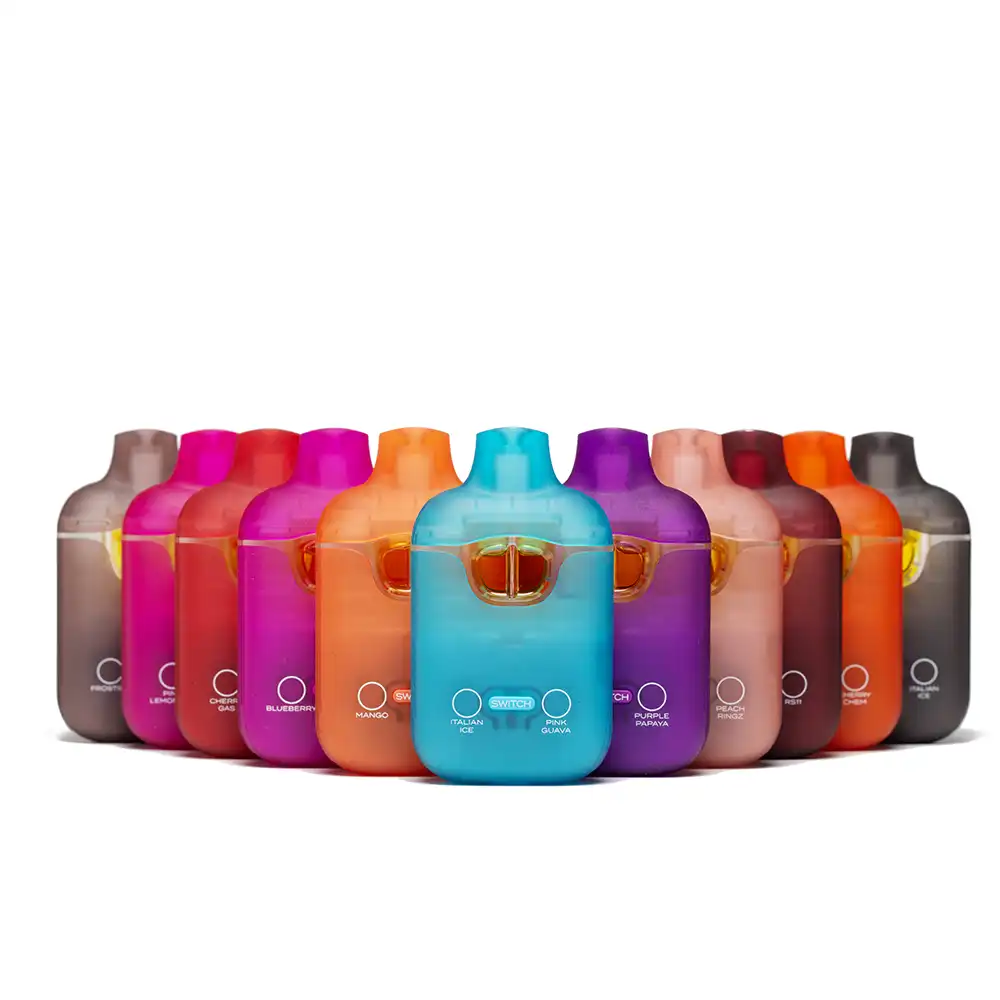
The boutiq switch glow real vs fake decay test
This is the whole page in two minutes, and it is the check to run before any other.
Hold the shell about a hand’s width from a bright lamp, or in direct daylight, for two full minutes. Then take it into a genuinely dark room, give your eyes thirty seconds to adjust, and watch.
A genuine shell starts noticeably bright and fades gradually. At ten minutes it is clearly dimmer and still plainly visible. At half an hour it is faint. At an hour it is nearly gone. That curve, slow and continuous, is the signature, and it is what a boutiq switch glow real vs fake test is actually looking for.
The failures are obvious once you know the curve. Paint and print do not charge at all, so there is nothing to see beyond a faint sheen. Cheap phosphorescent additives charge and then collapse, bright for a minute or two and dark by five. And a tinted plastic with no phosphor simply looks pale in the dark, holding whatever ambient light is in the room rather than emitting anything.
Uniformity, and what applied paint looks like
The second boutiq switch glow real vs fake test runs while the shell is still lit. Look at how the light is distributed rather than how bright it is.
On a genuine unit the phosphor is through the shell material, so the glow is even across the whole body, including the curves and the shoulders. Brightness varies with thickness rather than with position, so any change you see is gradual.
Applied coatings give themselves away by their edges. You get a visible boundary where the coating stops, often just short of a seam or a shoulder where it was awkward to apply. You get patches: brighter where the coating pooled, darker where it thinned. And you get a glow that sits on the surface rather than appearing to come from within the material, which is subtle in a photograph and obvious in your hand.
Check the shoulders and the area around the port specifically. Those are the hardest places to coat evenly and the first places an applied finish shows itself.
The V4 platform underneath
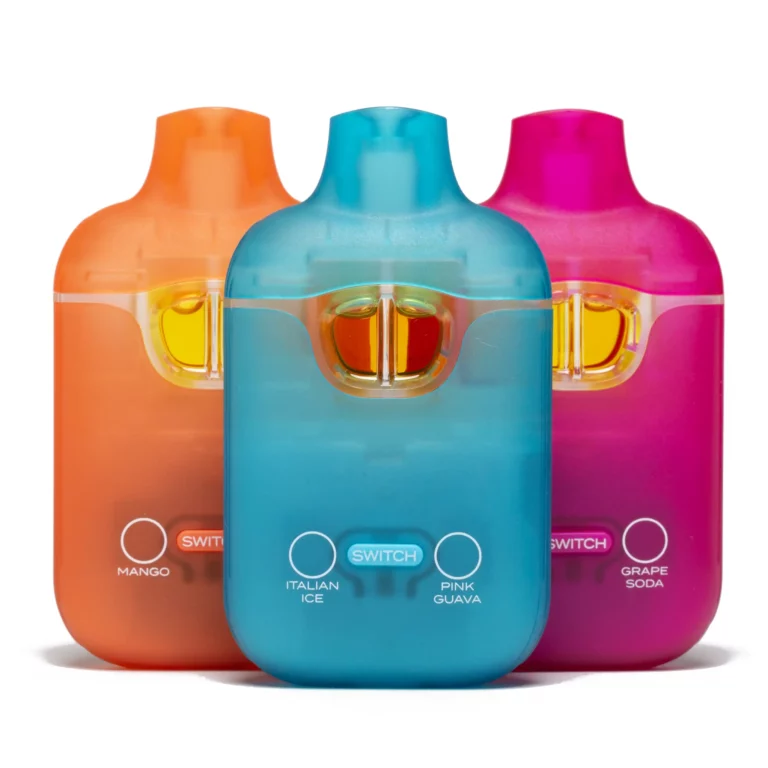
The Glow is a limited run built on the V4 platform with one deliberate change to the shell. Nothing about the mechanism, the tanks or the board is different. That matters in both directions.
It means every standard check still applies. Selector feel, port alignment, draw resistance, indicator behaviour: all of it should match a standard V4, and a Glow that glows convincingly while failing those is a genuine shell around something else.
It also means a Glow whose body geometry does not match a V4 is wrong regardless of how well it lights. Compare the shoulder profile and the port position against the Glow listing, and use the V5 versus V4 comparison if you need to confirm which generation a shell actually belongs to.
Daylight colour and the print
Daylight is the weakest place to judge boutiq switch glow real vs fake questions, but it is not useless. Phosphorescent material has a characteristic look before it is charged: a slightly chalky, pale cast that is not quite the flat colour of ordinary plastic. It is easy to recognise once you have seen both side by side and hard to describe in isolation, which is why this check comes after the decay test rather than before it.
Print behaves differently on this shell too. Ink over a phosphorescent surface sits slightly differently from ink on standard plastic, and a counterfeit using standard artwork on a standard shell often looks too crisp rather than too rough. Registration should still be exact and small text should still have sharp inside corners; those rules do not change.
One extra tell worth knowing: some counterfeits print a glow effect into the artwork, a lighter halo meant to suggest luminescence in a photograph. In daylight it is convincing. In the dark it does nothing at all, because it is a picture of a glow rather than a glow.
Checking a Glow you have owned for months
A shell that has been in daily use gives you evidence a sealed one cannot, and it is worth knowing what normal ageing looks like before you read wear as a counterfeit signal.
Phosphorescent material does dull slowly with heavy light exposure over a long period, so a Glow that has lived on a sunny windowsill for six months genuinely lights less than a new one. What does not happen is a sudden change, and what does not happen is one area dulling while the rest stays bright. Even, gradual dimming across the whole body is ageing. A patch that has stopped working is a coating that has worn through.
Handling wear tells you the same story from the other direction. On a genuine shell the phosphor is through the material, so a scuff removes gloss and leaves the glow intact underneath. On a coated imitation a scuff takes the glow with it, which shows as a dark scratch in the dark room test while looking like an ordinary scratch in daylight. That contrast is one of the cleanest boutiq switch glow real vs fake signals you will find on a used device, and it costs nothing to look for.
Boutiq switch glow real vs fake at a glance
| Check | Genuine Glow | Weight |
|---|---|---|
| Decay curve after 2 min charge | Bright, fading gradually over about an hour | Highest |
| Independence from battery | Glows with a flat cell, nothing switchable | Highest |
| Uniformity | Even across the body, no coating edges or patches | High |
| Body geometry | Matches the V4 platform exactly | High |
| Daylight cast | Slightly chalky pale, not flat plastic colour | Medium |
| Print quality | Exact registration, sharp small text, no printed halo | Medium |
| Wear behaviour | A scuff dulls gloss, the glow survives underneath | Medium |
Either of the two highest weight checks failing is a conclusion on its own. This is the one product in the range where a single test is genuinely decisive, and it is worth saying so rather than pretending everything requires the full scoring exercise.
A limited run means fewer pairings, not more
One last boutiq switch glow real vs fake signal sits in the listing rather than the device. The Glow exists as a limited run, so the genuine range is small. Counterfeit operations work the opposite way, fitting whatever artwork they have to whatever shells they have, which produces Glow units offered in a long list of pairings lifted from the standard range.
Check what actually exists rather than trusting the listing in front of you. The Glow category shows the real range and the flavours guide covers how pairings are normally written. A Glow offered in a dozen pairings is worth a second look before anything else.
If a unit fails these checks, keep it with its packaging and photograph the shell in daylight, the shell in the dark, the port and the batch panel before you contact anyone. Then raise it with the seller and tell us through contact. If it passes, confirm the batch through verification and note where you bought it, because a tested supply route is worth more than any inspection routine. Background on unregulated vaping hardware is published by the United States Centers for Disease Control and Prevention and by the United States Food and Drug Administration.
Glow edition questions
What settles boutiq switch glow real vs fake fastest?
The decay curve. Charge the shell under a bright lamp for two minutes, then watch it in a dark room. A genuine phosphorescent shell starts bright and fades gradually over roughly an hour. A painted or printed imitation either never lights meaningfully or drops to nothing within a couple of minutes. It costs you two minutes and nothing else comes close.
Does the glow drain the battery?
No, and that is a useful check in itself. The effect is phosphorescence, not powered lighting, so the shell absorbs light and releases it with nothing drawn from the cell. A unit whose glow dies when the battery is flat, or that has any light source you can switch, is not the genuine article.
My Glow barely lights. Is it counterfeit?
Check the charging first. Phosphorescent material needs bright light to charge, and a device that has lived in a pocket has had almost no exposure. Put it under a lamp or in daylight for two minutes and retest in a genuinely dark room. Only after that does a weak glow mean anything.
Is the Glow a different device from the V4?
It is the same platform with a shell that behaves differently in the dark. Nothing about the mechanism, the tanks or the board changes. So every V4 check applies, and the glow tests are additional evidence rather than a replacement for them.
Why are there so few Glow pairings?
It is a limited run, so the range is genuinely small. That matters for spotting counterfeits: a Glow offered in a long list of pairings, especially pairings from the standard range, is more likely to be standard artwork on a shell that was never a Glow at all.
Does a glowing shell prove the contents are genuine?
No. The shell and the extract are separate questions. A shell can be authentic and refilled, which is why the glow tests sit alongside the batch panel and the hardware checks rather than replacing them.