
Counterfeiters have become very good at packaging and remain poor at hardware. That gap is the entire basis of telling a Boutiq Switch real vs fake, and it means the checks worth doing are physical and functional rather than visual. A box that looks perfect tells you almost nothing useful.
Start with the selector, not the box
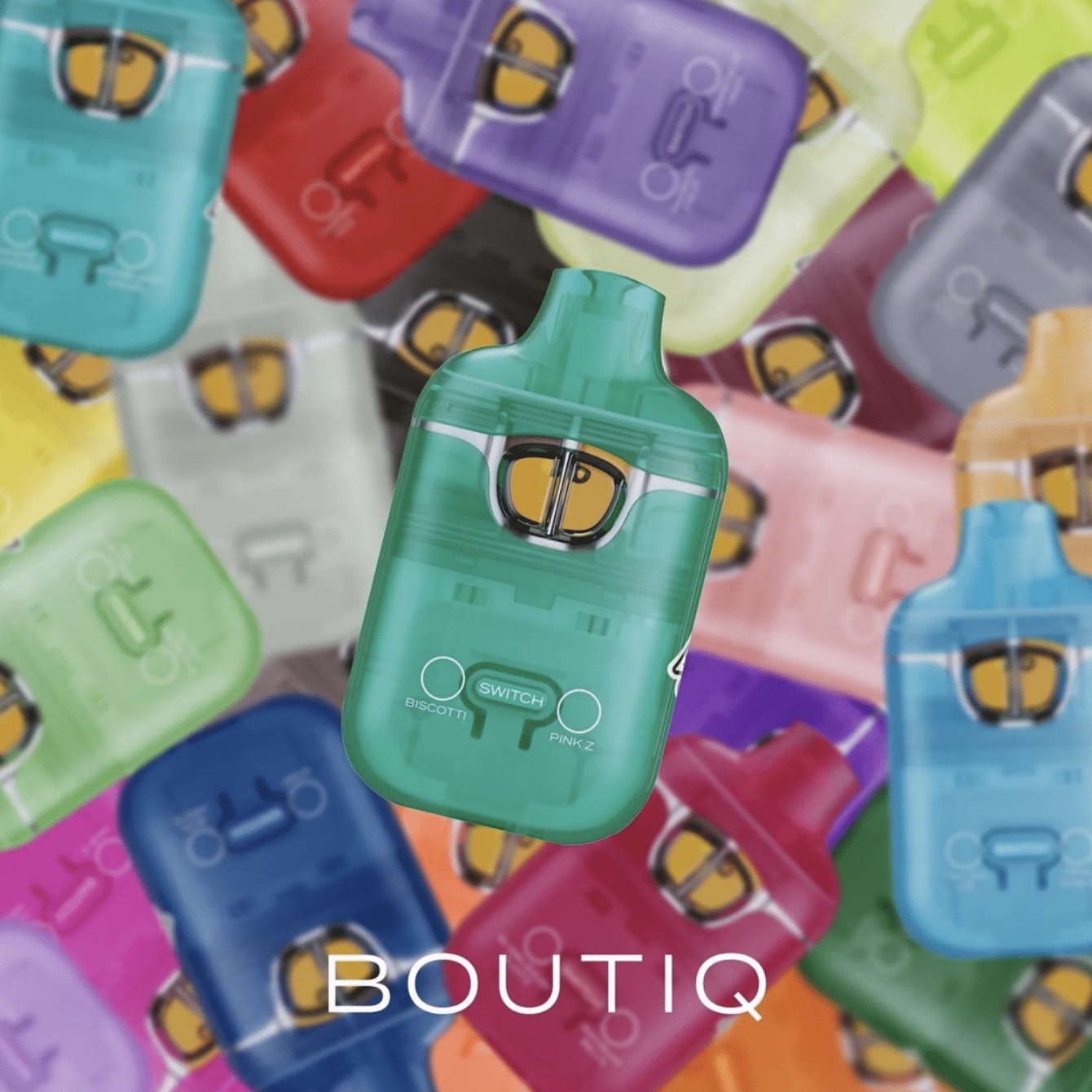
The mechanical selector is the most expensive part of a Boutiq Switch to reproduce correctly and the part counterfeiters most often get wrong. On a genuine Boutiq Switch the switch moves with a definite detent: you feel it seat into position and it stays there under light pressure. On a copy it usually moves with a vague springy resistance, or it seats but can be nudged off centre with a fingernail.
Test the Boutiq Switch unpowered and with your eyes closed. You are checking whether the mechanism has a positive stop, not whether it looks right. A selector that can rest between positions is a counterfeit almost every time, because a genuine one physically cannot: the chambers are isolated and the mechanism is built so that an intermediate position is not a position at all.
This matters beyond authentication. A selector that fails to seat properly can let both chambers draw at once, which is why fakes so often taste muddled and inconsistent rather than simply weaker. Buyers usually describe this as the flavors having blended, and it is a mechanical fault rather than a formulation one.
If you have owned a genuine device before, run the test on both and the difference is immediate. If this is your first, the selector test is still useful in isolation because the failure mode is binary: it either has a positive stop or it does not.
Boutiq Switch real vs fake: weight and balance
A genuine 2g Boutiq Switch has a specific weight distribution, because the extract sits in sealed chambers at particular positions in the body. Counterfeit Boutiq Switch units are frequently lighter overall, and more tellingly they balance differently. Hold the device horizontally across one finger: a real one sits close to centre while many copies are noticeably mouthpiece-heavy.
Underfilling is the reason, and it is the most profitable corner to cut. Extract is the expensive component and the only one a buyer cannot see. A counterfeit claiming 2g very often holds appreciably less, so the device works, tastes of something, and simply runs out far sooner than it should. Most people put that down to heavy use rather than fraud.
If a device seems to be emptying unusually fast and you are confident it is genuine, the explanation is usually draw length rather than fill weight, and our lifespan guide works through the arithmetic. Rule that out before concluding you were shortchanged.
Weight is the weakest check on this page taken alone, because it needs a genuine reference in the other hand. Treat it as corroboration for a device that has already failed the selector test rather than as a first line of assessment.
What the mouthpiece and airflow reveal
Look closely at the join where the Boutiq Switch mouthpiece meets the body. Genuine units have a clean even seam with no visible adhesive. Counterfeits frequently show glue at the join, or a seam slightly proud on one side, because they are assembled to a lower tolerance and often by hand rather than by machine.
Then draw on the device with it switched off. A real one offers a specific and fairly tight airflow resistance. Many fakes are noticeably loose, which produces a thin hot draw in use and is one reason counterfeit devices get described as harsh. Airflow is a deliberate design decision on a genuine product and an afterthought on a copy.
Do not jump straight to counterfeiting if the device simply is not producing vapor well. That has several ordinary causes and our troubleshooting guide works through them in order of likelihood. Establish that the hardware is genuine first, then diagnose performance separately.
The mouthpiece is also where cheap materials show. A genuine mouthpiece has a consistent finish with no seam lines you can feel with a fingertip. Running a nail around the inner lip finds moulding flash on a surprising number of copies.
LED behaviour is hard to fake and easy to check
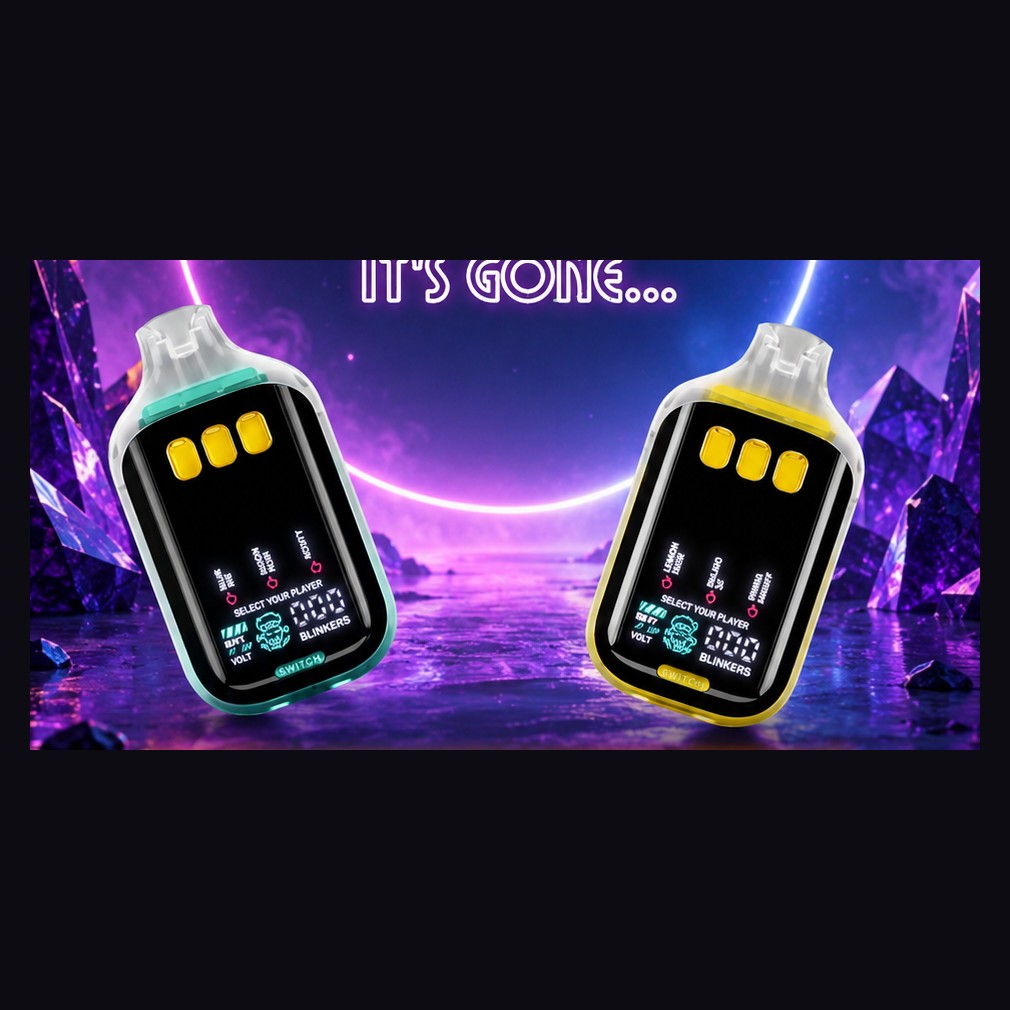
Genuine Boutiq Switch devices use specific light patterns to report charge state and fault conditions, and those patterns are consistent within a generation. Counterfeits typically use whatever board was cheapest, so the light behaviour is simplified or simply different. Our blinking light guide documents what each pattern actually means on a real device.
The practical test takes seconds. Plug it in briefly: a genuine device signals charging one way and completion another. A copy very often shows a solid light regardless of state, or blinks continuously, because there is no real charge management behind the board.
That last point deserves more weight than authenticity alone. Charge management is what prevents a lithium-ion cell being overcharged, and a counterfeit with a generic board is not something to leave charging unattended overnight. Our charging guide covers safe practice for genuine hardware, and none of it compensates for a board that does not manage charge at all.
If you are weighing safety questions more broadly, the safety guide separates the risks that come from the extract from the risks that come from the hardware, which are different problems with different answers.
The packaging tells that still work
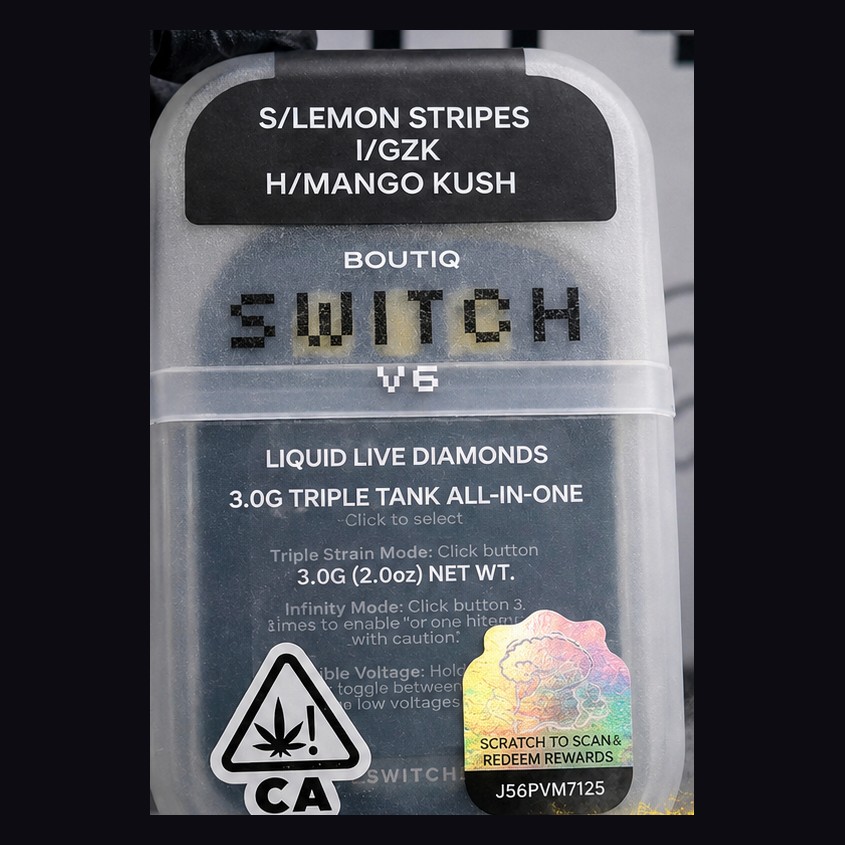
Print quality is largely a dead end now. Two things remain useful. First, the batch code should be printed rather than stickered, and it should stay crisp under a phone camera zoom. A stickered code is a strong warning, because stickers allow one valid code to be reused across an entire counterfeit run.
Second, the code has to actually resolve. A code that looks correct and returns nothing is worse than no code at all, because somebody went to the trouble of faking the format. Run it through the verification tool and check it against the published panels rather than trusting that it looks plausible.
Put no weight on Boutiq Switch shrink wrap, holograms or QR stickers. All three are available to anyone with a few hundred dollars of equipment and have been weak signals for several years. A counterfeit with a hologram is not a better counterfeit, it is a counterfeit with a hologram.
Batch codes that appear on multiple boxes in the same order are the clearest single tell in a multi-device purchase. Genuine boxes from one batch share a batch code by design, so this is only meaningful if you know what you are looking at, which is why the resolving check matters more than the code itself.
What to do once you conclude it is fake
Stop using the Boutiq Switch. That sounds obvious and people routinely do not, because a counterfeit that tastes acceptable feels like a tolerable outcome. The problem is not flavor. You have no idea what is in it and no lab panel that applies to it, and the residual solvent and heavy metal risk in unregulated hash oil is real rather than theoretical.
Contact the seller the same day and name the specific check that failed. A legitimate seller who was themselves supplied counterfeit stock will want to know and will usually resolve it. A seller who turns evasive when told which physical test the device failed is confirming what they already knew.
Then buy the replacement somewhere you can verify before paying. Our buying guide covers what to ask a seller in advance, which is the part that actually prevents this rather than detecting it after the money has gone.
If you want to sanity-check what a genuine device should taste like before judging a suspect one, the flavor guide describes each profile specifically. A device that tastes like nothing in the catalog is a useful data point on its own.
Common questions about spotting fakes
What is the single most reliable Boutiq Switch real vs fake test?
Test the selector. On a genuine device it seats into each position with a definite detent and cannot rest between positions; on most counterfeits it moves vaguely and can be nudged off centre. It is the most expensive part to reproduce correctly and the one most often got wrong.
Can I tell a fake from the packaging alone?
Rarely. Counterfeit packaging is frequently excellent because it is cheap to copy, and holograms, shrink wrap and QR stickers are all easily obtained. The only packaging checks still worth doing are whether the batch code is printed rather than stickered and whether it resolves to a published lab panel.
My device feels lighter than my last one. Is it fake?
It might be, because underfilling is common on counterfeits and extract is the one component a buyer cannot see. But weight only works as a comparison against a genuine device you have handled. On its own it is weak evidence, so verify the batch code instead of relying on it.
Is it safe to keep using a device I suspect is counterfeit?
No. The concern is not flavor but the absence of any applicable lab panel, since residual solvents and heavy metals in unregulated extract are a genuine risk. Stop using it, contact the seller the same day, and state which specific check it failed.
Do holograms or QR codes prove a device is genuine?
No. Holograms, shrink wrap and QR stickers are all cheaply available to counterfeiters and have been weak signals for years. What cannot be faked cheaply is a batch code that resolves to a published lab panel matching the unit in your hand.
Spotting a fake
What is the fastest check?
The smallest text on the panel. Counterfeits reproduce logos well and six point type badly, so bleeding ink or collapsed spacing gives them away in seconds.
Can a fake carry a real batch code?
Yes, which is why the code is the first check rather than the only one. A real code plus correct print quality plus visibly viscous sauce is what is hard to fake together.
Does a low price prove it is fake?
Below the cost of the extract inside, effectively yes. Within the normal range price tells you very little, so go back to the code and the print.
Where the fakes actually come from
Understanding the supply of counterfeits explains why certain sellers are riskier than others. Copies are not made one at a time by opportunists. They are produced in volume, sold into wholesale channels at prices well below genuine trade cost, and then distributed by resellers who may not know what they are handling. That last part matters, because plenty of shops selling fakes are not deliberately lying.
This is why the price test works so well. A seller offering stock far below the normal band is either losing money on every unit or was sold counterfeit stock themselves. Neither explanation should reassure you, and both are more likely than a genuine clearance.
The resale and marketplace channels carry the most risk, because listings there can be created faster than platforms remove them, and a seller account can be replaced within a day. A shop with a fixed domain, a returns process and published batch codes has something to lose, which is itself a form of protection.
If you already own a device you are unsure about, do not keep using it while you decide. Work through the checks on the verification page, and read the background on unregulated vaping products published by the Centers for Disease Control and Prevention before drawing on anything that failed a check.
It is worth saying plainly what a counterfeit costs you beyond money. A copied device is built to look right rather than to work right, which means the coil, the cell and the oil were all chosen on price. That combination is why counterfeits run hot, taste harsh and fail early, and why the hardware itself is the part worth worrying about rather than only the contents. Background on the wider category and its history of unregulated supply is set out in the overview of electronic cigarettes on Wikipedia. The practical response is unchanged and simple: buy where the batch code resolves to a certificate, check the device before the first draw, and treat an unusually low price as information rather than luck. A seller who cannot answer a batch question has already told you what you needed to know.